Greetings!
We are happy to release Vol. VII, Issue 10 of
Renaissance, second in the series exploring Sri Aurobindo as a Literary Artist.
Any attempt to go deep into the elevating charm and beauty of Sri Aurobindo's literary writings must begin and end with
Savitri, his epic mantric poem. Sri Aurobindo, the Rishi, like a precisely perfect scientist used writing of
Savitri, in his own words, as a field of experimentation. A most perfect example of how all life and work can truly be Yoga.
|
|
|---|
|
In this issue we briefly take up the theme of Dawn in Sri Aurobindo's literature and present it in two ways.
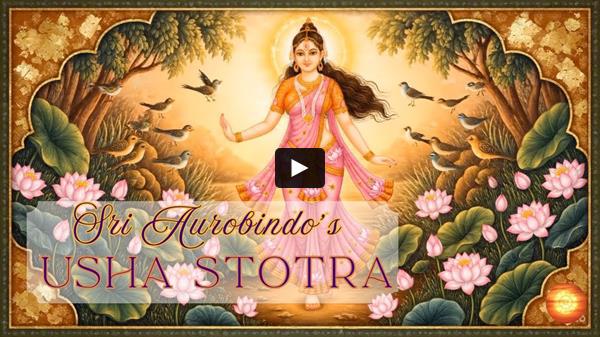
Usha Stotra | Sri Aurobindo | Translation by Nolini Kanta Gupta
Video by Suhas Mehra
One is a video rendition of Sri Aurobindo's
Usha Stotra (Hymn to Usha). Written in Bengali in the manner of the Suktas of the Rigveda, Sri Aurobindo composed it in Pondicherry. We use the translation done by Shri Nolini Kanta Gupta for the video.
|
|
|---|
|
Read a brief commentary on the Usha Stotra HERE
|
|
|---|
|
The other offering is a meditation on the first few lines from Sri Aurobindo's
Ilion which opens with a mesmerising poetic description of the beauty of dawn on the day Troy will fall. This excerpt is from a larger book project on which the author is working.
|
|
|---|
|
The focus in part 3 of
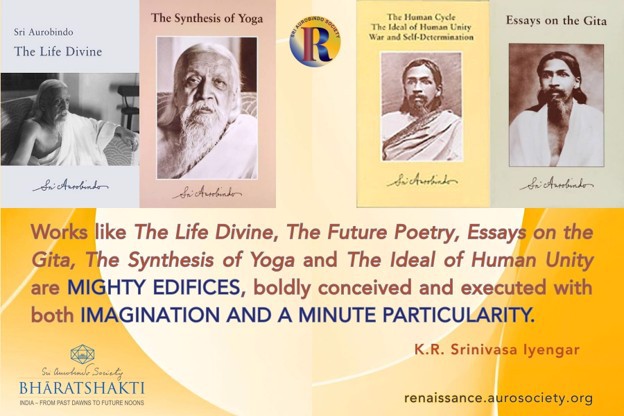
Sri Aurobindo as a Literary Artist shifts to Sri Aurobindo’s monumental prose writings such as
The Life Divine and
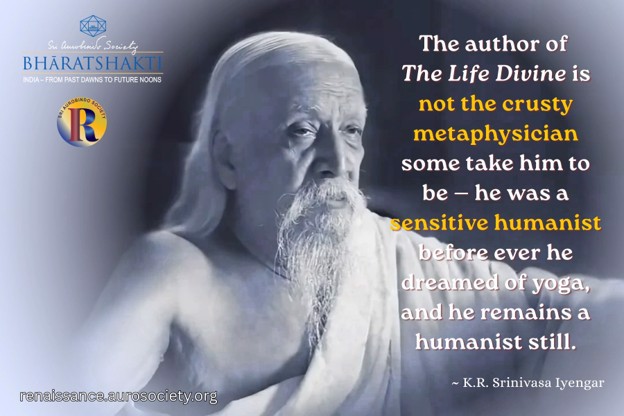
Essays on the Gita. K.R. Srinivasa Iyengar helps us appreciate the remarkable balance, clarity and the vigour of the phrasing Sri Aurobindo employs which he says, “are almost as worthy of reverent study as are their logical structure and their close-grained fabric of thought”.
|
|
|---|
|
In part 4 K.R. Srinivasa Iyengar gives several examples to illustrate that Sri Aurobindo’s brilliant prose writings can’t hide the poet that he was, and in many a places, the knife-edge clarity and sharpness of his prose dissolve into poetic imagery and symbolism.
READ PART 4
|
|
|---|
|
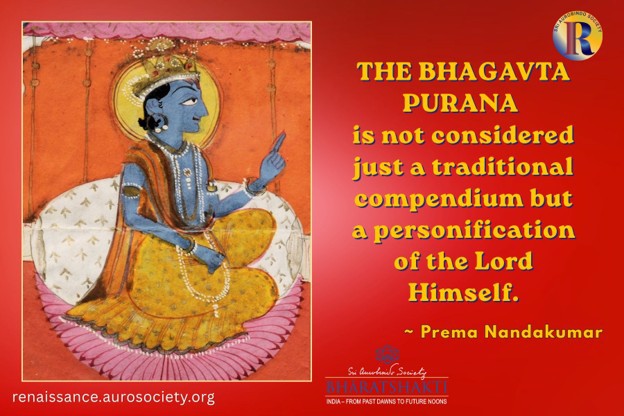
Prema Nandakumar in part 3 and 4 of her ongoing essay zooms in on Vishnu and Bhagavata Puranas which Sri Aurobindo held in high esteem. He particularly recognised the Bhagavata to be “the culmination of the movement which had the most important effects on the future, the evolution of the emotional and ecstatic religion of Bhakti” (CWSA 20: 375).
|
|
|---|
|
|
|
|
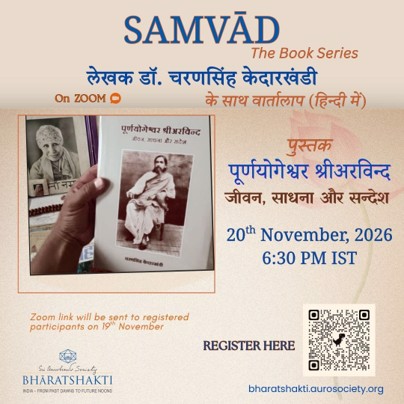
Date: November 20, 2026, 6:30 PM
Venue: ON ZOOM
REGISTER HERE
|
|
|---|
|
|
Zoom link will be sent by email to all registered participants on 19th November.
BhāratShakti team will be organising a new edition of its SAMVĀD: The Book Series, which celebrates Authors, Books, and Booklovers. The online programme to be conducted on November 20, 2026 will feature a conversation – in Hindi – with author Dr. Charan Singh Kedarkhandi, regarding his newly released voluminous book in Hindi – पूर्णयोगेश्वर श्रीअरविन्द: जीवन, साधना और सन्देश
|
|
|---|
|
|