|
Namaste!
We are happy to release latest issue of
Renaissance. In a new series starting with this issue, Vol. VII, Issue 8-9, we will take a look at some aspects of Sri Aurobindo's literary side. His literary work spans an extraordinary range — poetry, epic verse, translations (from Bengali, Sanskrit, Tamil), philosophical essays, reviews, literary criticism and letters on poetics — created across several decades from his childhood in England through his final years in Pondicherry.
|
|
|---|
|
We begin with serialising a remarkable essay, titled
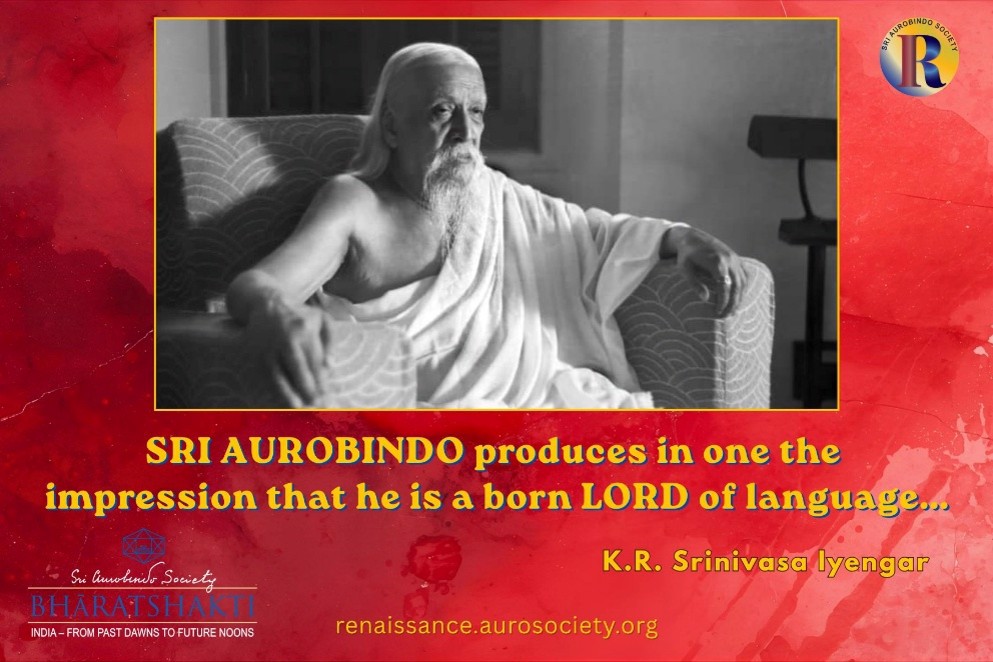
Sri Aurobindo as a Literary Artist by Prof. K. R. Srinivasa Iyengar. This was first published in 1943, in Volume 2 of
Sri Aurobindo Mandir Annual, a journal published by Sri Aurobindo Pathamandir, Kolkata.
|
|
|---|
|
PART 1
In part 1, the author gives a broad outline of the various motives which inspire an artist, with a specific focus on the work of a literary artist.
|
|
|---|
|
PART 2
In this part, the author pinpoints to the precision and liberality with which Sri Aurobindo uses words, and says that “he is both voluble in appearance and compact in effect.” He gives an example of one of the thousands of letters Sri Aurobindo had written to his disciples and marvels at is impeccable phrasing.
|
|
|---|
|
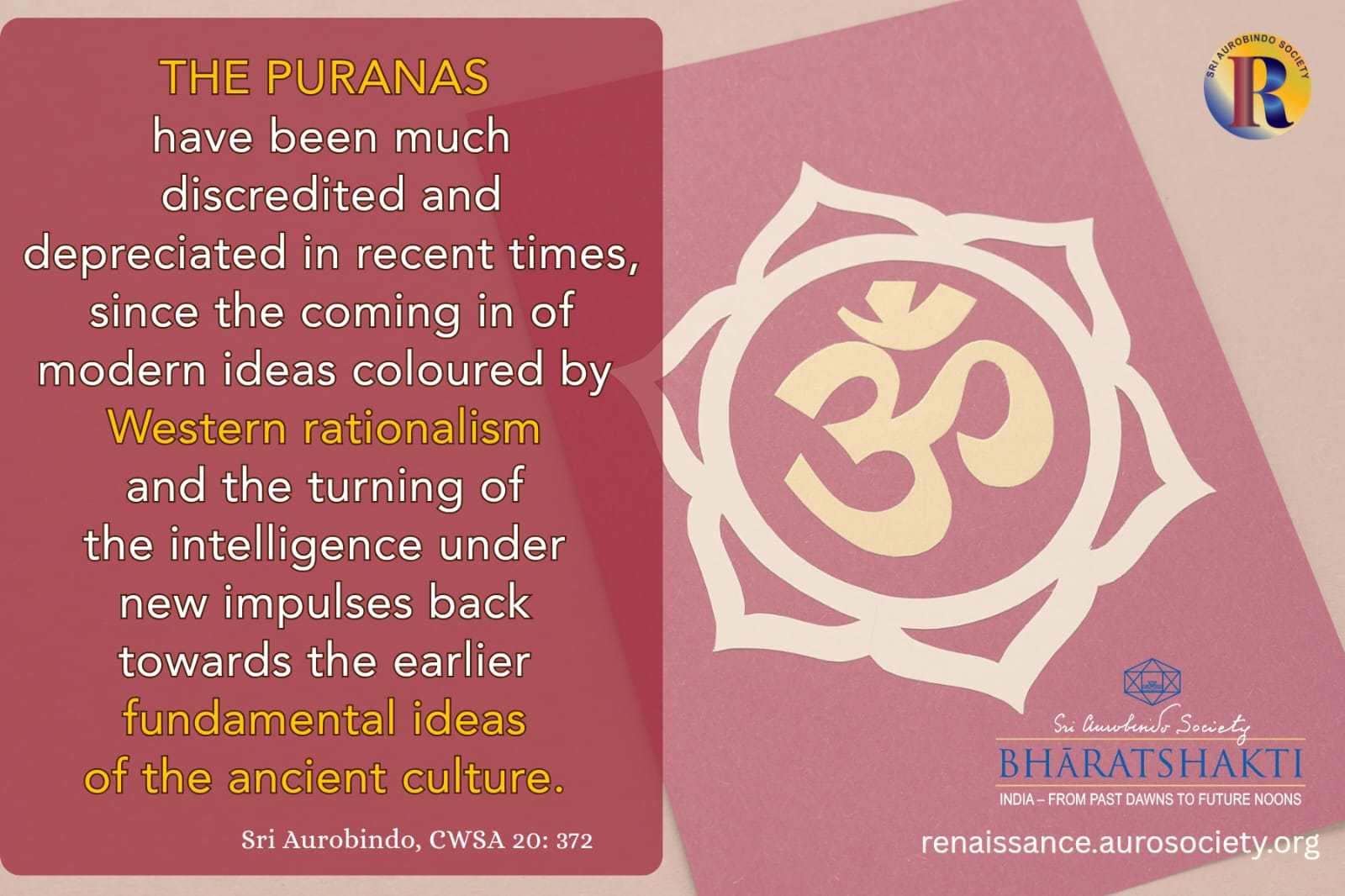
Sri Aurobindo has given a rigorous and nuanced assessment of the Puranas as literary works. Seeing them from literary, spiritual, philosophical, cultural, and historical perspectives, he speaks of them as "a new form and extension of the truth of the ancient spirituality" (CWSA, 20: 372) and has also carefully defended them against modern mind's depreciation.
|
|
|---|
|
In this light, we begin another series titled The Puranas and Our Century by Dr. Prema Nandakumar. Starting with this issue we will be featuring in various parts a series of essays she wrote for
Mother India on the literary, cultural and spiritual significance of the Puranas in the light of Sri Aurobindo.
In the current issue we feature in 2 parts bulk of the first essay published in October 2003 issue of
Mother India, Vol. 56 (10), pp. 857-863. Rest of the essay will be taken up in the next issue.
|
|
|---|
|
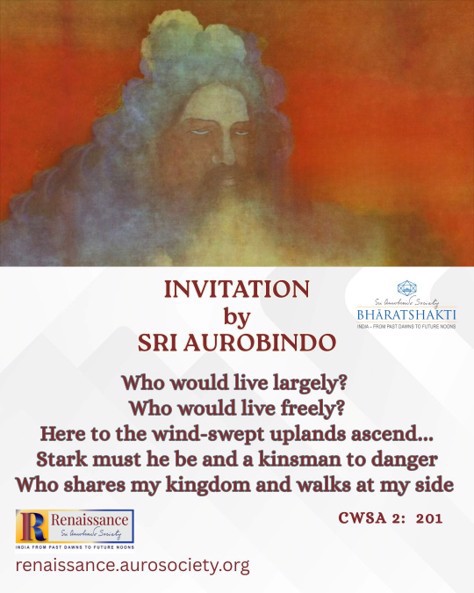
Shantha Rajan joins the authors' team with this issue. She reminds us all of true meaning of Sri Aurobindo's call, an invitation to join him in the grand adventure of consciousness as she reflects on the Master's poem titled
Invitation.
|
|
|---|
|
Dance in India has a rich tradition dating back to ancient times. Excavations, inscriptions, chronicles, genealogies of kings and artists, literary sources, sculpture and painting of different periods provide extensive evidence on dance. Legends and myths from times immemorial support the view that dance has played a significant place in the religious and social life of the Indian people.
In different parts of the country, dance evolved its own distinct style taking on the culture of that particular region, each acquiring its own flavour.
Consequently, a number of major styles of ‘art’ dance are known to us today, like Bharatnātyam, Kathakali, Kuchipudi, Kathak, Manipuri, Odissi and Sattriya. There are numerous regional variations, as well as countless dances of rural and tribal areas, which range from simple, joyous celebrations of the seasons, harvest or birth of a child to dances for the propitiation of gods or for invoking spirits.
|
|
|---|
|
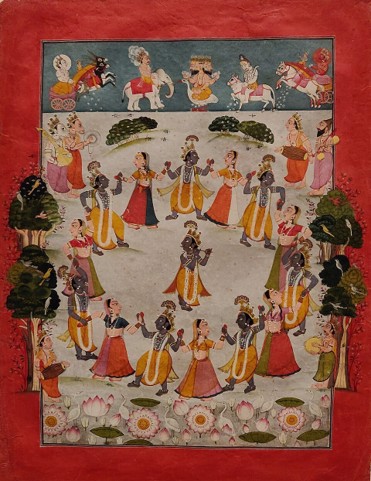
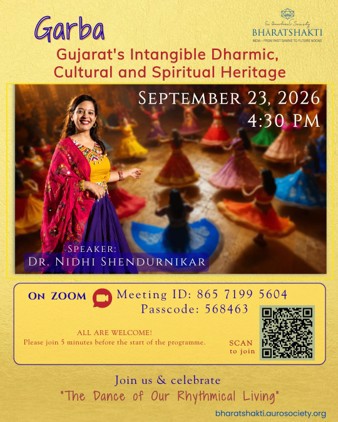
Garba is a traditional and devotional dance from the state of Gujarat, performed during the nine-night festival of Navaratri. Its very name ‘Garba’, derived from the Sanskrit word
garbha (womb), symbolises life and the circle of birth, death, and rebirth.
UNESCO has inscribed Garba on its Representative List of the Intangible Cultural Heritage of Humanity. To learn more about the deeper cultural and spiritual significance of Garba, BhāratShakti, Sri Aurobindo Society is organising an online talk on September 23, 2026.
All are welcome! Join us as we usher in the Sharad Navratri 2026!
|
|
|---|
|
Garba: Gujarat’s Intangible Dharmic, Cultural and Spiritual Heritage
Speaker: Dr. Nidhi Shendurnikar
Date: September 23, 2026
Time: 4:30 PM
Join Zoom Meeting
Meeting ID: 865 7199 5604; Passcode: 568463
|
|
|---|
|
RECENTLY PUBLISHED ARTICLES
|
|
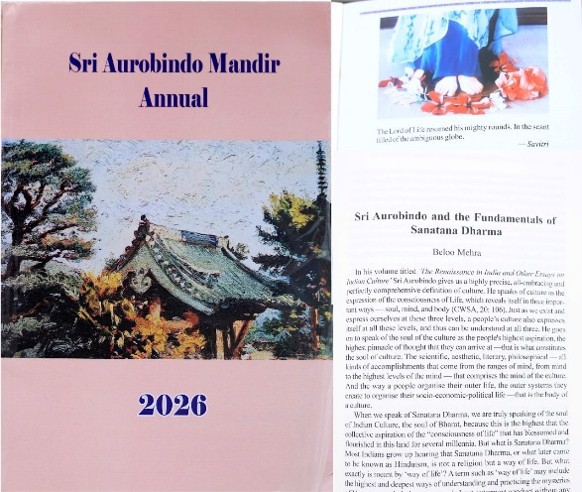
- Article titled
Sri Aurobindo and the Fundamentals of Sanatana Dharma authored by Beloo Mehra was published in the August 2026 issue of
Sri Aurobindo Mandir Annual.
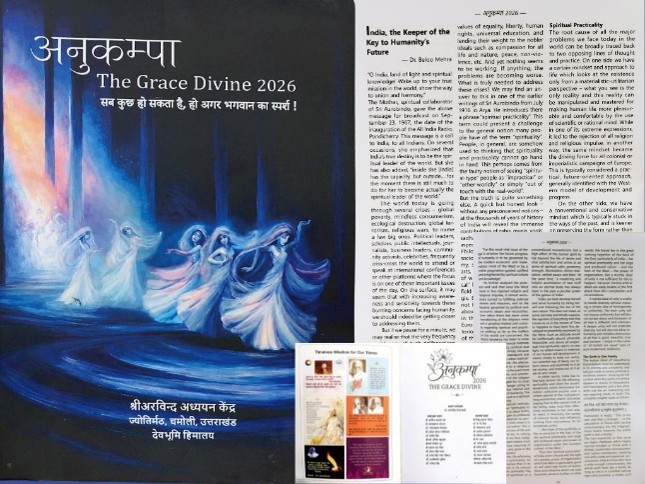
- Article titled India, the Keeper of the Key to Humanity’s Future authored by Beloo Mehra was published in the 2026 edition of
अनुकम्पा, The Grace Divine. .
|
|
|---|
|
EXCERPT
I have been restless lately, and it is not the ordinary restlessness of a deadline or a bad night's sleep. It is older than that. Something in me has been stirred — old rooms opening that I thought I had locked long ago. Sri Aurobindo would call it the vital plane throwing up its debris before a soul can climb higher. I won't always claim to know exactly what is moving in me. I only know the flashbacks are real, and so is the tiredness that follows them.
I want to write down where this restlessness comes from, because naming it is the only power I have ever had over it.
READ MORE
|
|
|---|
|
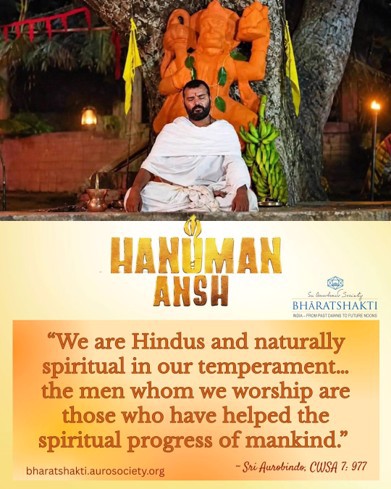
Many subtle truths are most simply expressed through specific sequences in the film
Hanuman Ansh and its overall narrative —truths about the power of absolute devotion and faith in the Supreme, about the path of Bhakti Yoga.
I focus only on a few which I found most powerful in the film. Things which have been resonating within since I experienced the magic of this film; things which reminded me of the truths I have long contemplated upon when reading the writings of Sri Aurobindo — truths about the soul of Bhārat, the great spiritual foundation on which our civilisation stands, and the essential Bhāratiya
svabhāva.
READ MORE
|
|
|---|
|
|
Stay tuned for our next newsletter
Subscribe HERE
IMPORTANT TIP: Please add our email ID -<renaissance@aurosociety.org> to your contact list. This will prevent the newsletter from going into your spam folder and thus ensure that you never miss an update from us!
Renaissance_SriAurobindoSociety
WhatsApp Group Invite

|
|
|---|
|
| |
|
| |
|
|