|
Greetings!
We are happy to bring the first issue of
Renaissance for the year 2026, Vol. VII, Issue 1.
|
|
|---|
|
In his writings on National Education, Sri Aurobindo reminds us that our efforts to rebuild a New India must be on the lines of the living spirit of the nation, her innate genius, the nation-soul of India. Our concern should not be about a conflict between modernism and antiquity, but rather between "an imported civilisation and the greater possibilities of the Indian mind and nature, not between the present and the past, but between the present and the future" (CWSA, 1: 420). As children belonging to Noons of the Future, we must move forward to our own "greater innate potentialities that is demanded by the soul, by the Shakti of India".
READ MORE |
|
|---|
|
Editor's Note: Launching of a fortnightly paper called
Mother India in 1949 was one of the ways to disseminate the The New Ideal that Sri Aurobindo placed before a New India that was raising itself to a new light after a long dark night of colonial rule. India's rise was never meant for India alone, but before she could give to the world her spiritual light she had to discover it for herself. This was the work she had to do for the coming New Age.
The specific aim of
Mother India was to examine all concerns and problems related to the multi-faceted contemporary life and explore solutions in the light of the highest spiritual ideal of integrating matter and spirit. In the very first issue (February 19, 1949, Vol. 1, Issue 1), Amal Kiran, the editor, described the paper's objectives under the title 'What is Mother India?' The most remarkable part of this writing is that it also provides a to-the-point description of the essence of Mother India, Ma Bharati - "the face and form of our presiding genius". We feature an extract from this writing in the current issue.
READ MORE |
|
|---|
|
Editor's Note: In our ongoing exploration of The New Ideal given to us by Sri Aurobindo, we come to one of the most important writings of Sri Aurobindo,
The Hour of God, circa 1918. In the 1955 issue of the annual journal
Sri Aurobindo Circle (pp. 115-117), Norman Dowsett wrote a brief but inspiring commentary on these deeply revelatory words of the Master. Read it in the current issue.
READ MORE |
|
|---|
|
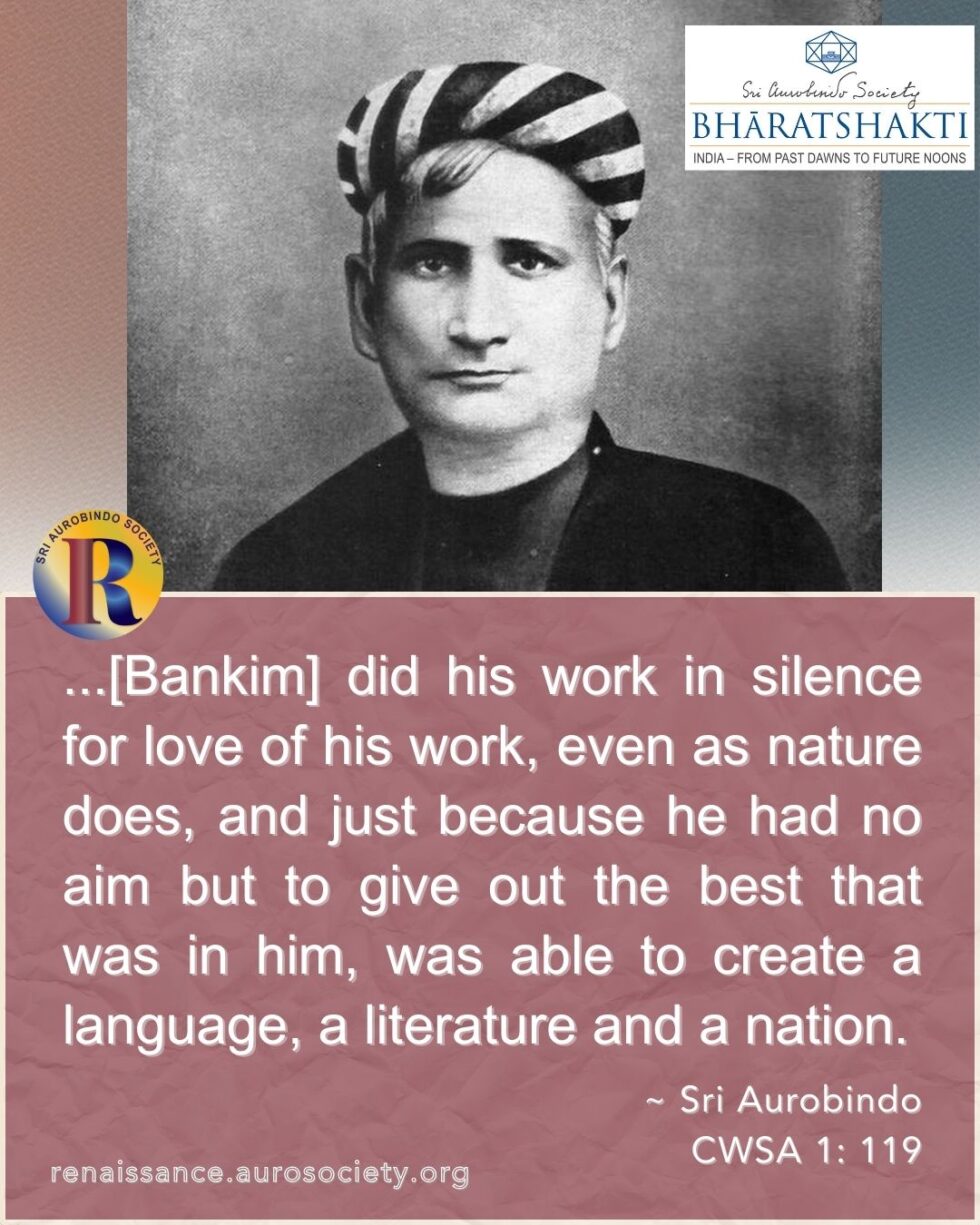
Editor's Note: Literature, like other creative pursuits, can be an important medium to orient the society towards a higher new vision, a greater ideal. It can also progressively shape the collective mind through its sustained influence. Sri Aurobindo spoke of "the awakening and stimulating influence" of Bankim Chandra Chatterjee on the national mind. "Young Bengal gets its ideas, feelings and culture not from schools and colleges, but from Bankim’s novels and Robindranath Tagore’s poems", he once wrote (CWSA 1: 118).
About Bankim's immense contribution to Bengali language and literature, Sri Aurobindo remarked that he "divined the linguistic need of his country’s future" (CWSA, 1: 639). Through his pen Bengali language became a means "of expression capable of change and expansion" and "by which the soul of Bengal could express itself to itself". Bankim gave to his country the religion of patriotism through his characters who were workers and fighters for the motherland, who demonstrated immense moral strength, self-discipline and organisational capabilities, and infused religious feeling into their patriotic work. "Of the new spirit which is leading the nation to resurgence and independence, he is the inspirer and political guru," wrote Sri Aurobindo (CWSA, 1: 640). |
|
|---|
|
The essay featured in the current issue (in 2 parts) highlights Bankim’s poetic style, vivid imagery, and nuanced portrayal of feminine character, particularly Matangini, whose inner conflict symbolizes India’s struggle between tradition and modernity. Drawing on Meenakshi Mukherjee’s and Makarand Paranjpe’s analyses, the essay interprets the novel as an allegory of emerging national consciousness, emphasizing its relevance to India’s ongoing quest for cultural integration and progress. A longer version of this article was first published in
New Race: A Journal of Integral and Future Studies, April 2015, Volume I (1), pp. 54-59. |
|
|---|
|
Editor's Note: In this part, the author emphasises that an integral spirituality harmonises all knowledge and all experience in the truth of a supreme and all-reconciling oneness. It ordains man to cross beyond death through
avidyā and enjoy Immortality by the Knowledge,
avidyayā mṛtyuṁ tīrtvā vidyayā'mṛtamaśnute.
To its vision, Matter too is Brahman,
annam brahma, and so it does not seek to annul or deny the positive knowledge which Science has gathered from an elaborate investigation and exploration of the processes of life and nature. It only completes it by pointing out that the true foundation is above while the branchings are downward, so that to know the essential truth of things as distinguished from their phenomenal appearances, one has to probe upward and inward instead of remaining content with only surface scrutiny.
READ MORE |
|
|---|
|
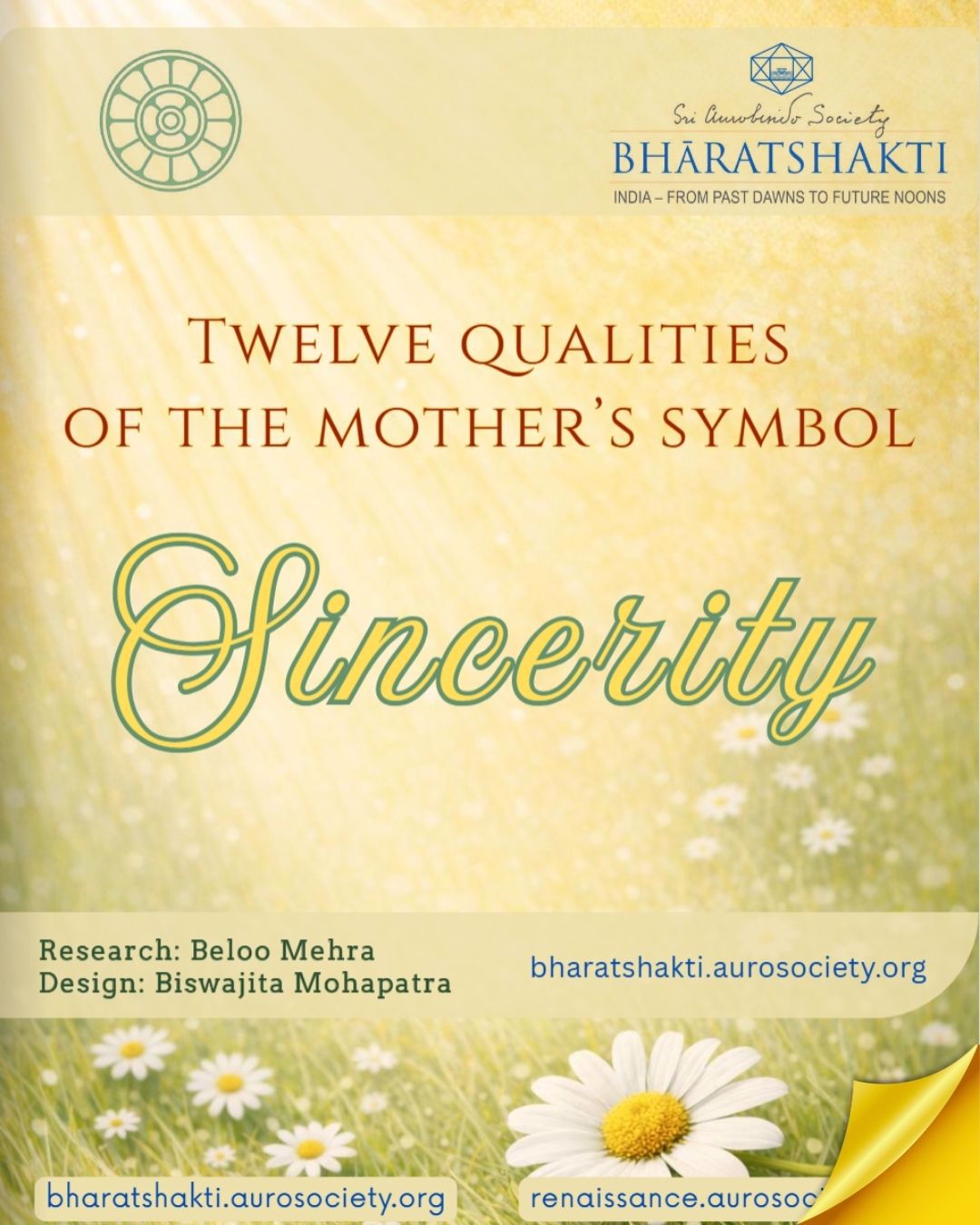
Starting January 2026, every month we shall revisit our exploration of the 12 attributes that the Mother has identified as soul-powers necessary for the full manifestation of Her Work. These qualities are:
Sincerity | Humility | Gratitude | Perseverance | Aspiration | Receptivity | Progress | Courage | Goodness | Generosity | Equality | Peace.
EXPLORE THE COMPLETE ISSUE ON SINCERITY |
|
|---|
|
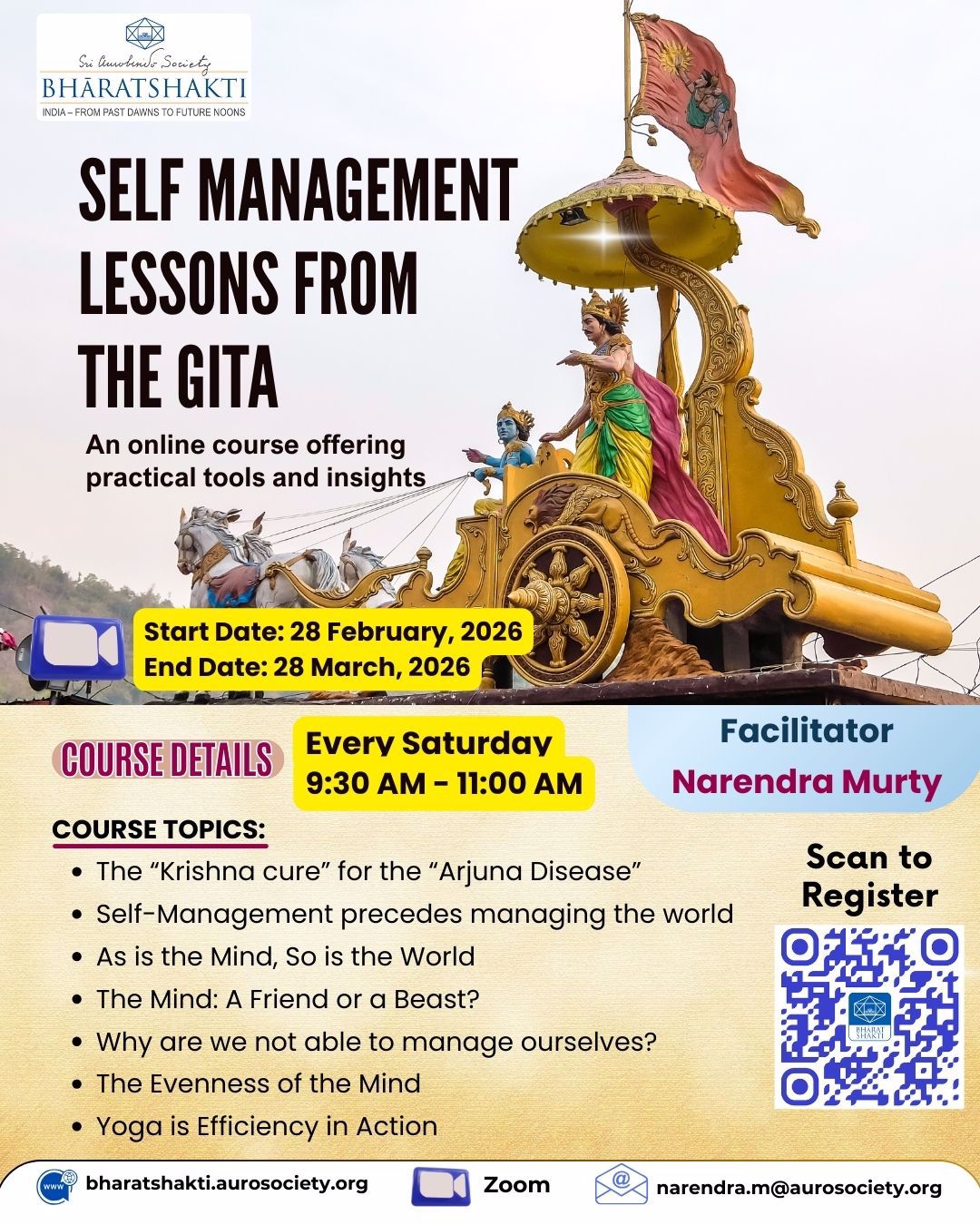
Start Date: 28 February 2026
End Date: 28 March 2026
Venue: Online
|
|
|
|
|
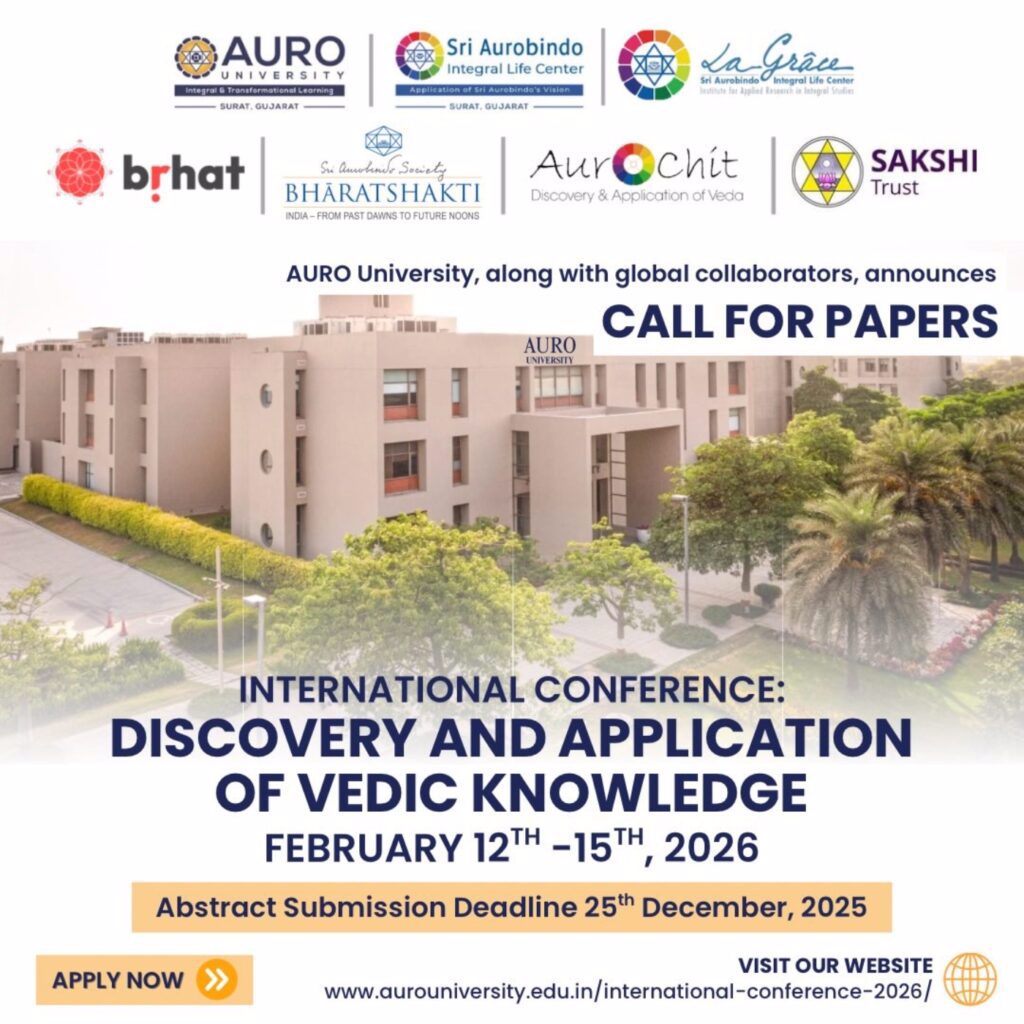
International Conference on the Discovery & Application of Vedic Knowledge |
|
|---|
|
|
- Conference Dates: February 12th – 15th, 2026
- Venue: AURO University, Earthspace, Surat, Gujarat, India
- Mode: Hybrid (Both in-person and virtual participation available)
READ MORE
REGISTER |
|
Stay tuned for our next newsletter
Subscribe HERE
IMPORTANT TIP: Please add our email ID -<renaissance@aurosociety.org> to your contact list. This will prevent the newsletter from going into your spam folder and thus ensure that you never miss an update from us!
Renaissance_SriAurobindoSociety
WhatsApp Group Invite

|
|
|---|
|
| |
|
| |
|
|